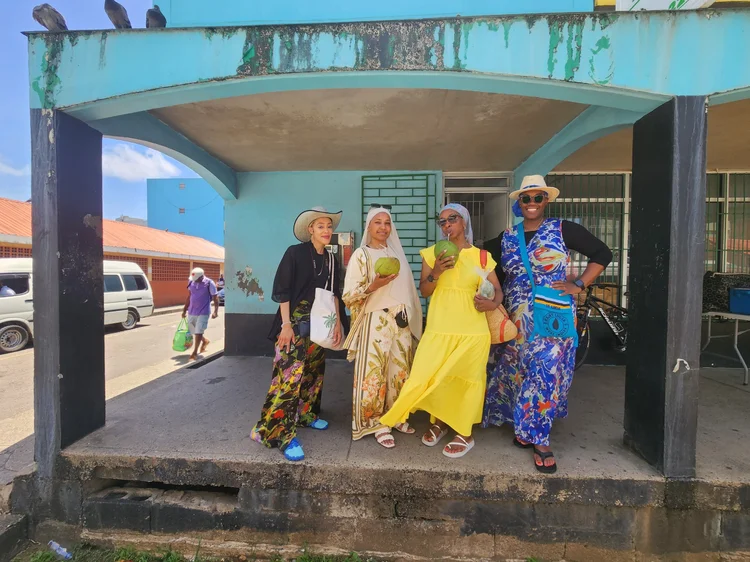
3. The hardest part isn't the trip. It's the return.I've been back on U.S. soil for a few weeks now. And I have to be honest: it's been rough. The humidity in Houston hit me the moment I landed. There's no chef here. No mountains outside my window. No sulfur springs. No fresh coconut delivered by a guy named Jimmy who rowed up to our boat with a machete and the calmest hustle I've ever seen. The trip was easy. Being in the trip was easy. Coming home and figuring out how to bring even 10% of that peace, presence, and self-knowledge into everyday life — that is hard. Most people I know fail this part. They come back from a break and within 48 hours, they're right back to the pace and habits they left. The trip becomes a photo album, not a change. Here's the thing: reacclimation is a design problem, not a discipline problem. You will not "will yourself" into keeping the peace of vacation. You have to build systems for it. What one thing from the trip do you want to bring home? What time on the calendar will you protect for it? What automatic rule can you set so it doesn't require willpower every day? For me, the list is small but specific: shop the farmer's market for real fruit. Get dressed up once a week and take a photo. Sing more. Not big life changes — just tiny, protected commitments that keep something of the trip alive in the everyday. What this means for you: The next time you come back from any break — a vacation, a retreat, a weekend away, even a long walk — don't just re-enter your life. Design your re-entry. Pick one thing. Protect it. Automate it if you can. The trip only pays a return if you spend a fraction of it back in your daily life. One more thing: There was a moment on the last night of the trip. Karaoke. I hadn't sung in front of people in years. And when I grabbed the mic and closed my eyes, something in me let go. I have a deep voice I forgot I had. Not because I lost it. Because I stopped using it. And I stopped using it because at some point, being a working mom and a founder and a wife and a full-time employee started taking up so much of me that "the parts of me that sing" got quietly filed under later. The trip reminded me that "later" is where dreams go to die. If something is important to you and you never make room for it, it's not important to you anymore. It's just something you used to want. This isn't a finance lesson. Except that it is. Because every dollar you earn is a means to a life, and if the life you're funding doesn't include the things that make you you, then the numbers aren't working. Rest. Sisterhood. Coming home differently. Singing. That's the ROI I brought back from Saint Lucia. I hope some of it lands for you too. Want to go deeper? Three ways I can help: 📌 Trying to think about the ROI on your own life — the money, the time, the energy, the relationships? Book an appointment with me. Choose 30 minutes for a quick question or 60 minutes if you want to walk through something more complex together. 🤝 Nonprofit leader? The Accidental CFO Roundtable is exactly the "friendship is infrastructure" idea in action — a free monthly community of mission-driven leaders working through these exact questions together. Join the next one. 🎯 Need ongoing financial leadership? That's what fractional CFO work is for. See how I work with clients. One more thing — for the readers who want the deeper story. I wrote a much more personal reflection on this trip — about womanhood, sisterhood, coming back to myself, and finally singing again over on my personal YouTube. If that resonates with you, it's here. Otherwise, next issue we're going back into the business side of things. There's a difference between showing someone your numbers and helping them understand your numbers, and most of us are doing the wrong one. Whether it's a board, a spouse, an investor, or your own inner voice, this one's about how to actually communicate about money. See you in two weeks, Professor Bee Nance
Your CFO Friend
|